
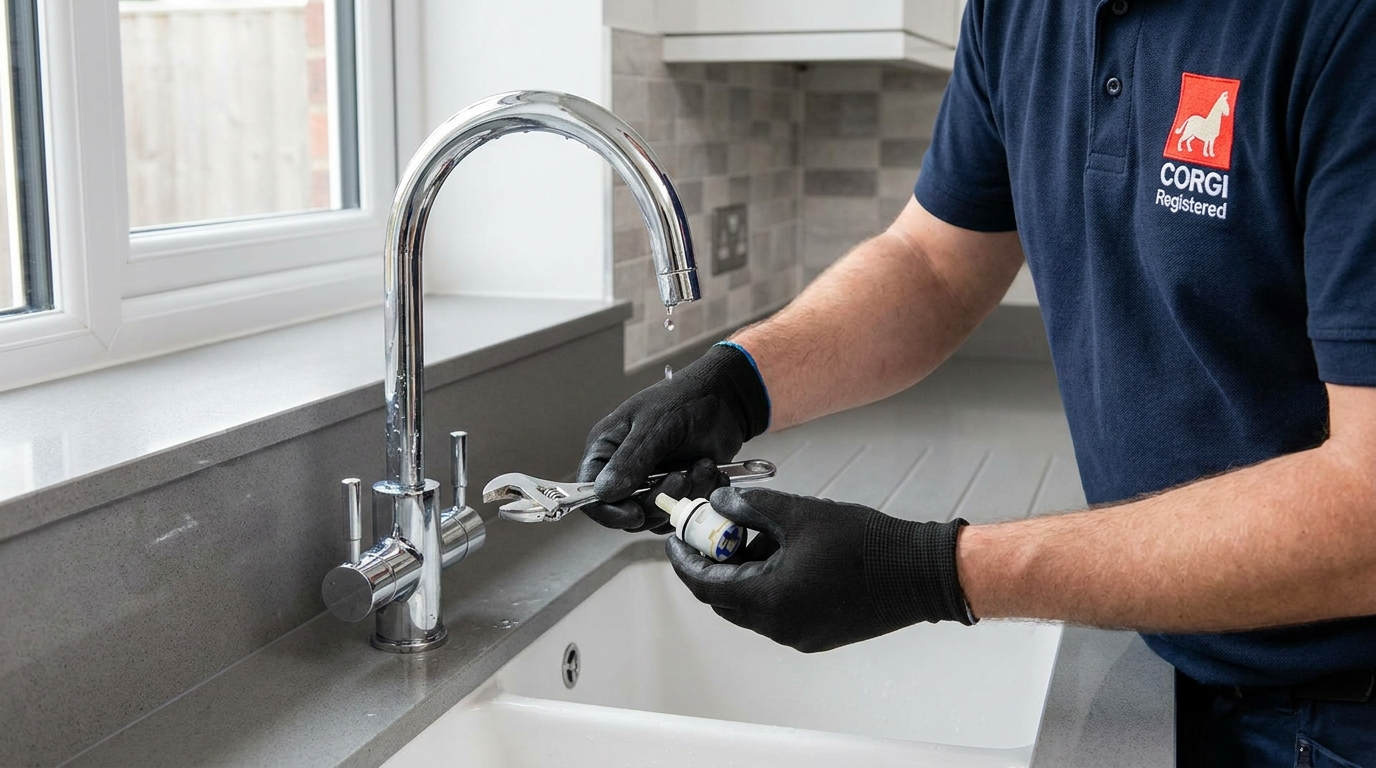
Most people put up with a dripping tap for weeks or months before doing anything about it. It seems minor — just a small drip — but the reality is surprisingly costly. A dripping tap is not just an annoyance; it is wasting water, adding to your bills, and usually getting worse over time. Here is exactly what a dripping tap costs you, and what to do about it.
How Much Water Does a Dripping Tap Waste?
The volume wasted depends on the drip rate, but even a slow drip adds up fast:
- 1 drip per second: approximately 31 litres per day — over 11,000 litres per year
- 2 drips per second: approximately 62 litres per day — over 22,000 litres per year
- Steady trickle: can exceed 100 litres per day — over 36,500 litres per year
To put this in context, the average person in Scotland uses around 150 litres of water per day. A tap dripping at two drops per second wastes the equivalent of an additional person's daily water use every single day.
What Does a Dripping Tap Cost in Money?
For homes with a water meter — increasingly common across Scotland — every litre counts. At current water rates in Scotland (approximately £1.50 per cubic metre from Scottish Water), a tap dripping at one drip per second costs:
- Monthly: approximately £1.40
- Annually: approximately £16
This may sound modest, but that is for one cold-water tap. If it is a hot tap, the cost is much higher because you are paying to heat the water too. A hot tap dripping at two drops per second can add £50 to £80 to your annual energy bills on top of the water cost.
Multiple dripping taps — kitchen mixer, bathroom hot tap, bath tap — quickly add up to a meaningful figure, particularly over several years of inaction.
Why Dripping Taps Get Worse Over Time
Most taps drip because an internal component has worn out — typically a rubber washer, ceramic cartridge, O-ring or valve seat. Once one component starts to fail, continued use accelerates the wear. What starts as an occasional drip becomes a constant drip, then a trickle, and eventually the tap may not close at all.
The water pressure also contributes — every time the tap is turned off and on, it stresses the worn component further. A tap that needs two turns to stop dripping today will need three in a few months' time.
What Causes a Tap to Drip?
- Worn rubber washer — the most common cause in older pillar taps. The washer compresses against a valve seat to stop water flow; when it degrades, water gets through.
- Worn ceramic cartridge — modern mixer taps use ceramic cartridges instead of washers. When the ceramic discs scratch or crack, the tap drips.
- Damaged O-ring — causes dripping from the base of the spout rather than the outlet.
- Corroded valve seat — when the surface the washer presses against is pitted, no washer can seal it properly. The seat needs re-grinding or replacement.
How to Fix a Dripping Tap
A dripping tap repair is one of the simplest and most cost-effective plumbing jobs — typically completed in 30 to 60 minutes on a single visit. Our plumbers carry common washers, cartridges and O-rings for most tap brands, so same-day repairs are the norm.
We provide dripping tap repair across Midlothian with a fixed price quoted before we start. There are no hidden call-out fees. Call 01315631581 and we will have the drip stopped — and your bills back down — today.