
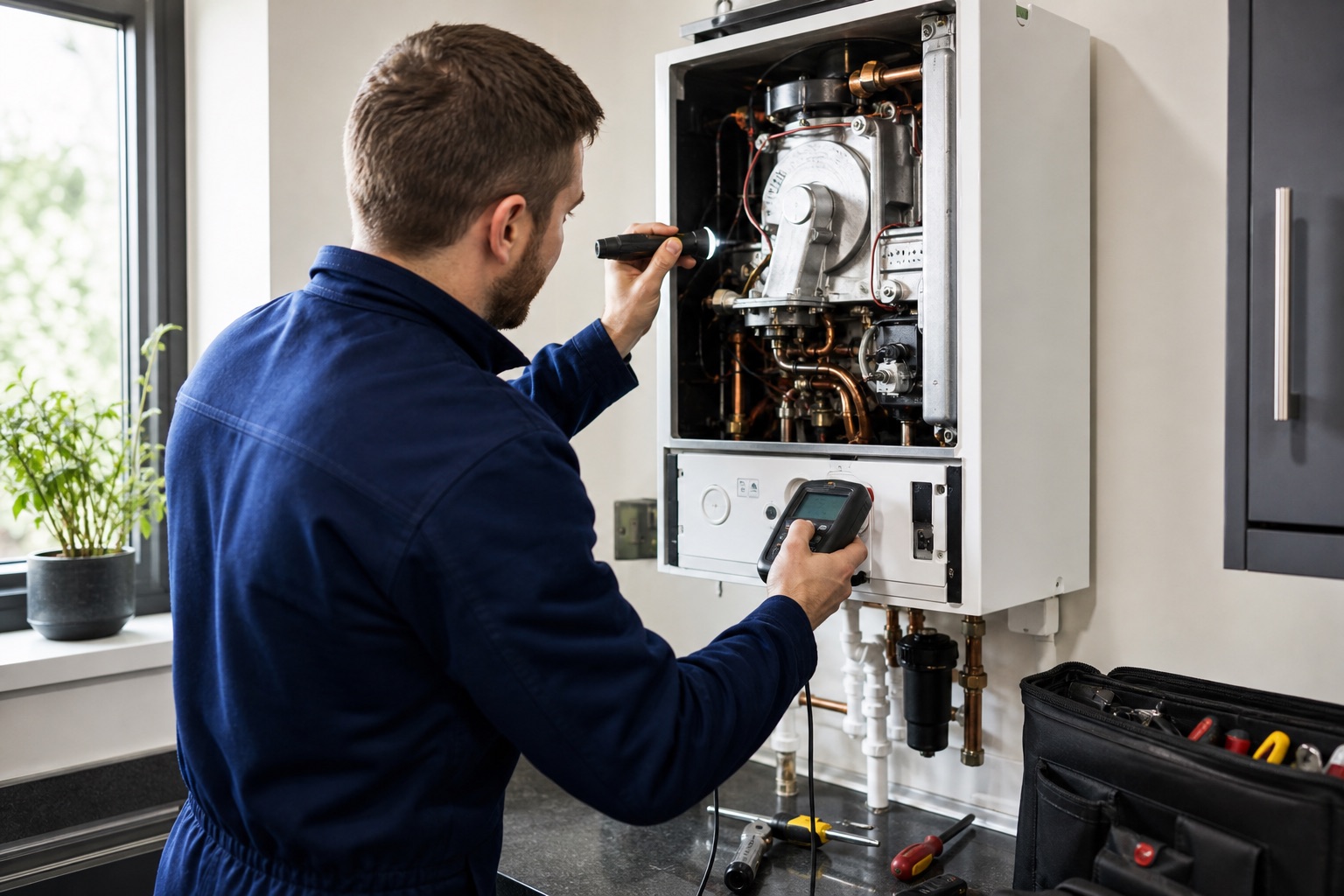
Scotland's winters are among the harshest in the UK. Midlothian regularly sees temperatures drop to -10°C or below, and that kind of cold puts enormous strain on boilers and heating systems. We receive more emergency boiler calls in January and February than the rest of the year combined. Here is a breakdown of the most common winter boiler problems — and what you can do about them.
1. Frozen Condensate Pipe (Most Common in Cold Snaps)
Modern condensing boilers — which are now the standard in all new and replacement installations — have a condensate pipe that carries acidic waste water from the boiler to an outside drain. This pipe runs externally (or through an unheated space), making it the most vulnerable part of your heating system in winter.
When the condensate pipe freezes, the boiler cannot expel waste and locks out with a fault code. Symptoms: boiler showing a fault light, gurgling noise before lockout, and no heating or hot water.
Fix it yourself: Locate the white plastic pipe on the outside wall (usually 21mm or 32mm diameter). Gently warm it using a hot water bottle, a wrapped cloth soaked in warm (not boiling) water, or a hairdryer on a low setting. Work from the boiler end towards the drain. Once thawed, press the reset button on your boiler. If the fault reappears, call us — the pipe may need permanent insulation to prevent recurrence.
2. Low Boiler Pressure
Cold weather increases the density of water in your heating system slightly, and the expansion and contraction cycles of heating up and cooling down can gradually drop your system pressure. Check your pressure gauge — it should read between 1 and 1.5 bar cold.
Fix it yourself: Most modern combi boilers have a filling loop (a small flexible braided hose under or near the boiler). Slowly open the valves at each end while watching the gauge, then close them when the pressure reaches 1.5 bar. If you are not sure how to do this, your boiler manual will have model-specific instructions — or call us and we will talk you through it.
When to call a plumber: If the pressure drops again within a few days, you have a leak somewhere in the system that needs tracing with our leak detection equipment.
3. Boiler Lockout
Modern boilers have built-in safety systems that shut the boiler down (lockout) when they detect a fault. The boiler will display a fault code on its display, and the reset button light will flash. Common causes in winter include frozen condensate (as above), low gas pressure from high nationwide demand during cold snaps, faulty ignition, or overheating due to sludge build-up.
Press the reset button once and wait for the boiler to attempt a restart. If it fires successfully, monitor it over the next few hours. If it locks out again, do not keep pressing reset — this can mask a serious fault. Call an engineer to diagnose the fault code properly.
4. Cold Radiators Despite the Boiler Running
If some radiators are cold at the top but warm at the bottom, they need bleeding. Cold air trapped in the radiator prevents hot water from circulating fully. Use a radiator bleed key (available from any hardware store for around £1) to open the bleed valve on the side of the radiator until water flows out steadily, then close it.
If entire radiators — particularly ground floor ones — are completely cold while upstairs radiators are fine, you likely have sludge in the system. Central heating sludge (magnetite) settles at the bottom of radiators and in pipework, blocking circulation. A power flush carried out by our engineers clears sludge and dramatically improves system efficiency.
5. Pilot Light Keeps Going Out in Cold Weather
In older boilers with a standing pilot, cold and draughty conditions around the boiler flue can extinguish the pilot light. Lighting it following your boiler manual instructions is straightforward, but if it keeps going out, the thermocouple (a safety device that detects whether the pilot is burning) has likely worn and needs replacement. This is a Gas Safe engineer job — do not attempt to bypass a faulty thermocouple.
6. No Heat but Hot Water Still Working (or Vice Versa)
On combi boilers, separate fault on the heating side while hot water works normally often points to a faulty diverter valve — the component that directs hot water to radiators or to the hot tap. This valve can stick in one position, particularly on older boilers. It is repairable by a Gas Safe engineer and costs less than a replacement boiler.
When to Call a Professional Boiler Engineer
Call us immediately if you experience:
- The smell of gas near the boiler
- A yellow or orange boiler flame
- Carbon monoxide detector alarm
- Water leaking from the boiler body
- Repeated lockouts despite resetting
- No heat or hot water for more than a few hours in winter (especially for vulnerable occupants)
Our boiler repair team is available 24 hours a day across Midlothian. We carry spares for all major brands and can usually complete same-visit repairs. Call us on 01315631581 any time of day or night.