
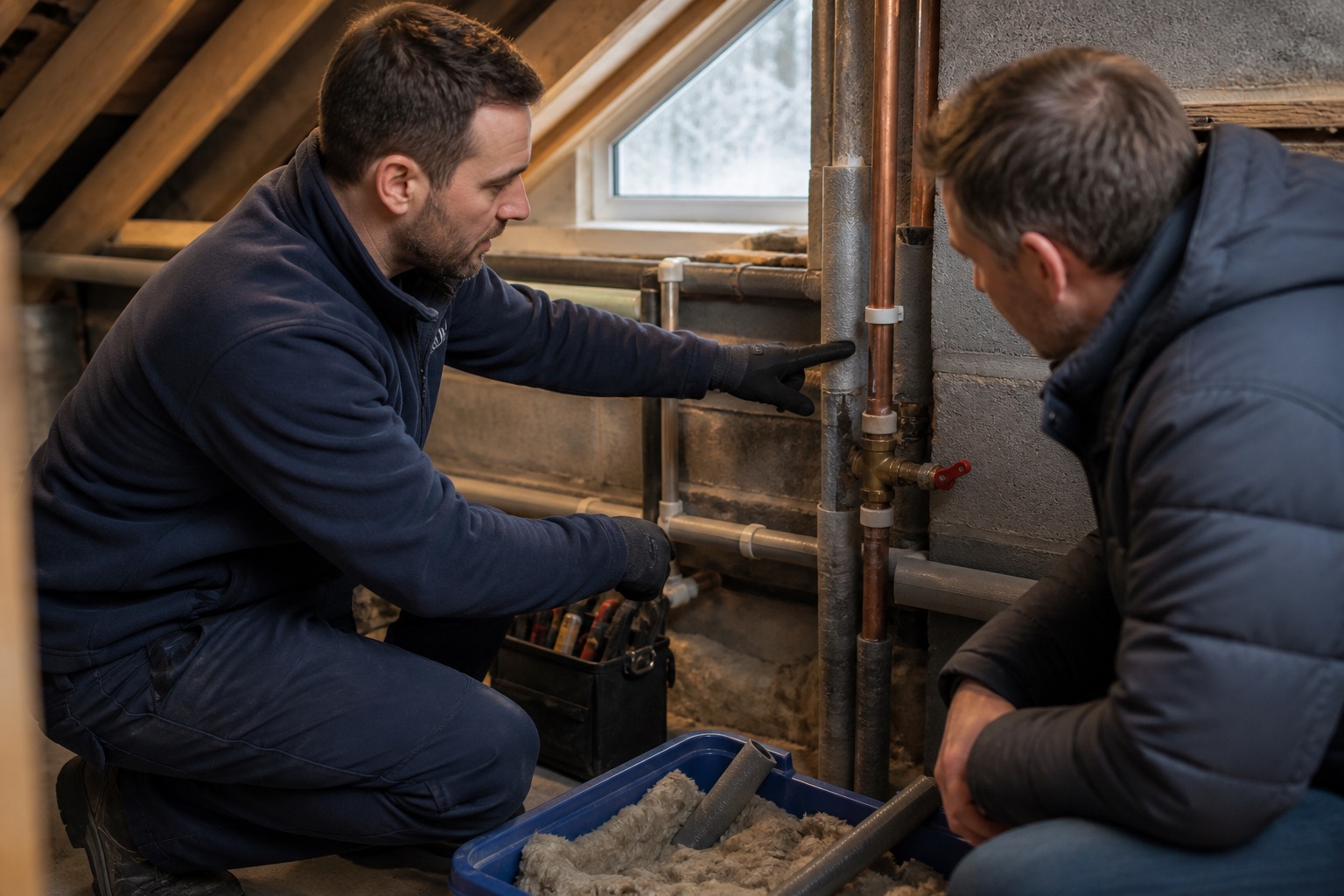
Midlothian winters are not to be taken lightly. Between November and March, temperatures regularly fall below freezing, and cold snaps can last days or even weeks. Plumbing and heating systems that have sat largely untroubled through the summer and autumn suddenly face their toughest test — and those that haven't been maintained often fail at the worst possible time. A few hours of preparation in September or October can save you from a very stressful winter.
1. Book Your Annual Boiler Service Before October
This is the single most important thing you can do. An annual boiler service by a Gas Safe registered engineer takes around 45–60 minutes and involves checking and cleaning combustion components, testing the heat exchanger, flue, and seals, verifying gas pressure and flow, and testing safety controls. A boiler that is serviced before the heating season starts is far less likely to fail on the coldest night of the year.
Demand for boiler servicing in Midlothian surges from October onwards — book in August or September to secure an appointment at a time that suits you. Our team offers annual boiler servicing across Midlothian with full Gas Safe certification and a service record provided after every visit.
2. Lag Your Exposed Pipes
Any pipe running through an unheated space is vulnerable to freezing. In Midlothian homes, the most at-risk locations are:
- Loft spaces — particularly in older properties where supply pipes run to a cold water tank
- Garages and outbuildings
- Pipes on external walls, especially north-facing walls
- Under-sink pipes adjacent to external walls in kitchens
- The condensate pipe on modern condensing boilers (see our guide to winter boiler problems)
Foam pipe lagging is inexpensive — approximately £1–£2 per metre — and simple to fit. It simply splits lengthways, fits around the pipe, and closes with self-adhesive strips. Pay particular attention to the boiler condensate pipe, which is almost always external and is the most common cause of boiler lockout in cold weather.
3. Check and Bleed Your Radiators
Before the heating season starts, turn on the central heating fully and feel each radiator after 20 minutes. Any radiator with cold patches at the top has trapped air and needs bleeding. Use a radiator key (inexpensive at any hardware store) to open the small valve at the top of the radiator until water flows out steadily, then close it. This improves heat output and reduces fuel consumption.
If your radiators — particularly those at the end of long pipe runs — never seem to heat properly even after bleeding, you may have system sludge. A power flush by our engineers will restore full circulation and can noticeably reduce your heating bills.
4. Check Your Boiler Pressure
Look at the pressure gauge on your combi or system boiler. It should read between 1 and 1.5 bar when the system is cold. Re-pressurising once a year (using the filling loop below or near the boiler) is normal. If the pressure drops repeatedly within weeks, you have a leak that needs investigating before winter sets in.
5. Locate and Test Your Stopcock
Every adult in your household should know where the main stopcock is and be able to turn it off quickly. It is usually under the kitchen sink, in a utility room, or near the meter. Test it: turn it clockwise until it stops, then confirm that water flow stops when you open a tap. Some stopcocks in older Midlothian homes seize up if left untouched for years — if yours is stiff or will not fully close, have it replaced before an emergency forces you to close it in a hurry.
6. Inspect and Insulate the Loft
If your property has a cold water header tank in the loft (common in older Dalkeith and Penicuik properties with traditional vented heating systems), ensure the tank and all associated pipes are well insulated. Do not insulate the loft floor directly under the tank — leaving that area uninsulated allows some warmth to rise from the rooms below and helps prevent freezing.
7. Service Your Condensate Pipe Before the Cold
The condensate pipe on modern condensing boilers runs outside or through an unheated space and is vulnerable to freezing. In properties we service across Midlothian, frozen condensate pipes are the single most common cause of winter boiler breakdown calls. If the pipe is short and exposed, wrapping it with foam lagging and heating tape (available from electrical retailers) is an effective preventive measure. Our engineers can assess the risk and fit appropriate protection during a service visit.
8. What to Do If You Are Going Away
Never fully turn the heating off if your home will be unoccupied during winter. Set the boiler to a frost protection temperature (usually 7–10°C) or set the programmer to come on for an hour morning and evening. This keeps the temperature above freezing throughout and prevents pipe bursts. Ask a neighbour or trusted person to check the property every few days if you will be away for more than a week.
Emergency Numbers to Save Before Winter
- Gas emergency: 0800 111 999 (smell of gas, gas leak — call immediately)
- Scottish Water (burst main or supply issue): 0800 077 8778
- 24/7 Emergency Plumbing Midlothian: 01315631581
Book a Winter Health Check for Your Plumbing
Our pre-winter plumbing and heating check covers boiler service, pressure check, radiator assessment, pipe lagging inspection, and stopcock test. It is the most cost-effective way to head into a Scottish winter with confidence. Book your check today — call 01315631581 or request an appointment online.